Today is Thanksgiving, & it feels right to start with thanks. Ahirbudhnya's gift is the rain, & the rain is what grows the harvest this day gives thanks for. My own people have said it longer than this country has: the Haudenosaunee Thanksgiving Address gives thanks to the waters of the world & to all the life living in them. So today, thanks to the lake, & to everything in it, named & unnamed.
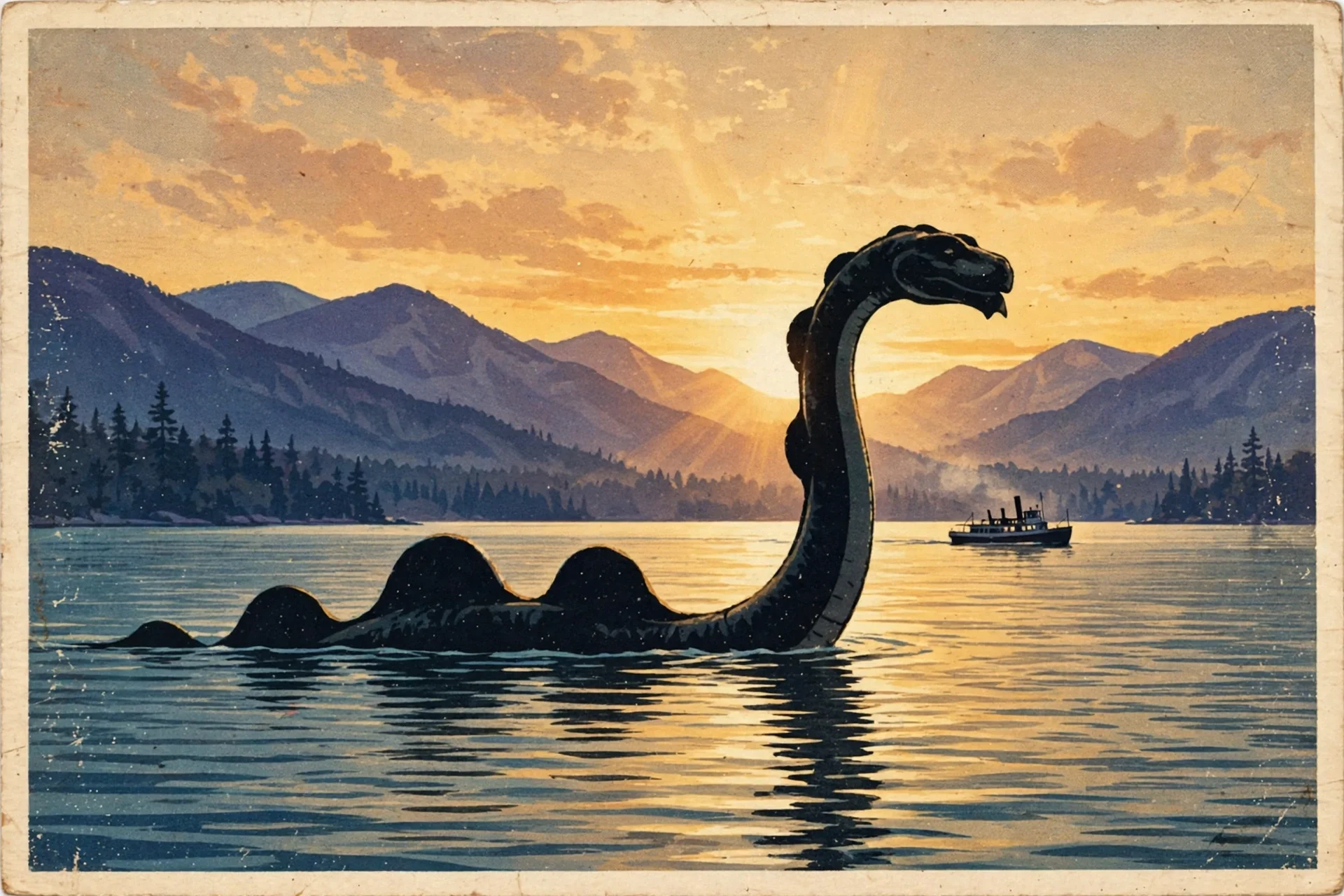
I live on Lake Champlain now, on Kingsland Bay, & everyone who lives on this lake knows Champ. Ask anyone at a dock or a boat launch & you will get a story, a sighting, a grandfather who swore by it. What most people do not know is that Champ has a much older name, & it was written in the stars thousands of years before this lake had a European name at all.
Here is the timeline, because the timeline is the whole story.
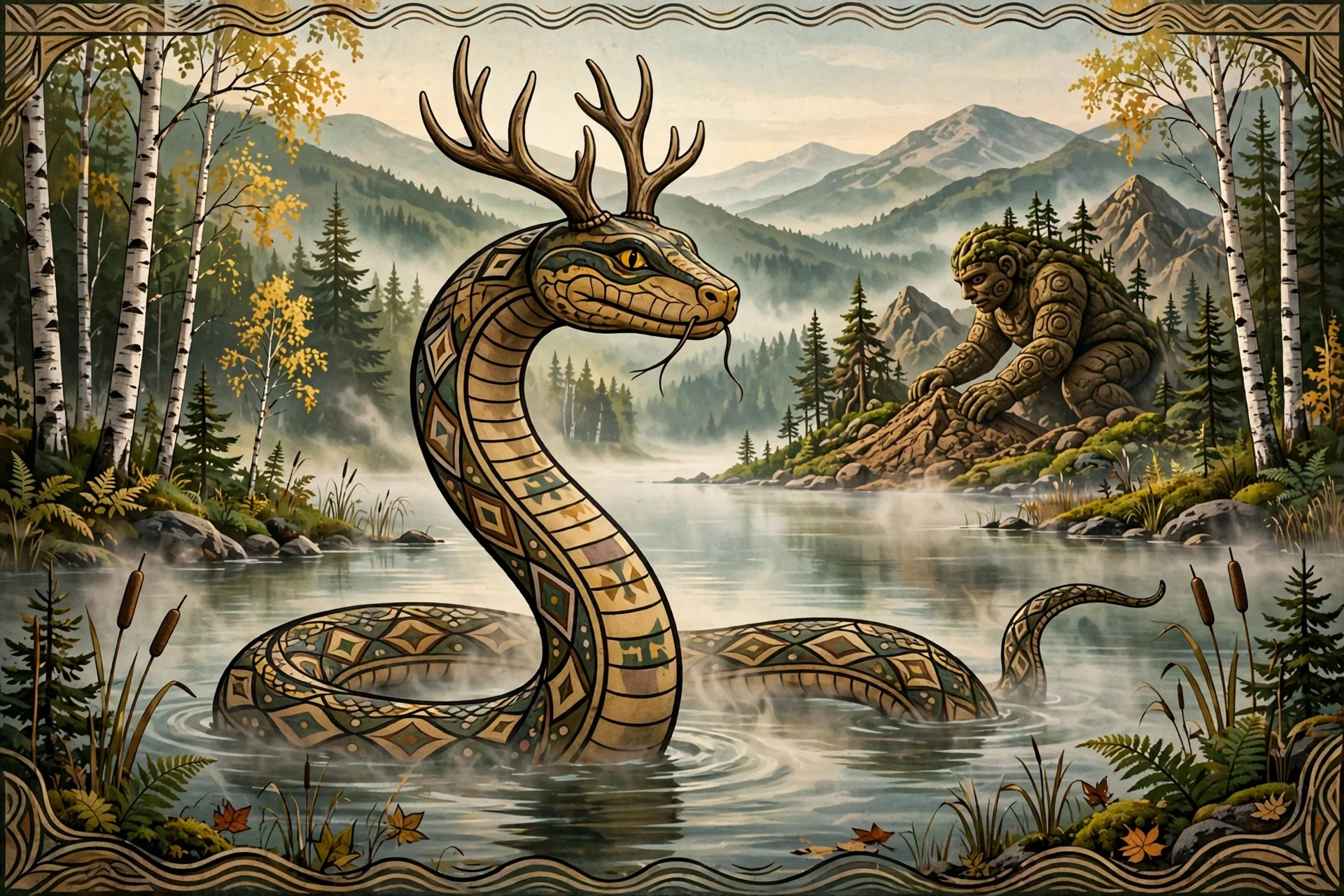
Before any Europeans arrived, the Mohawk spoke of Onyare'kowa, giant serpents in the water. I am Mohawk myself, & Sioux, my great grandmother was born on Cornwall Island, in the Mohawk territory on the Saint Lawrence, though no stories of Champ came down in my family. The Abenaki called this lake Pitawbagok, & in their telling the lake & its valley were shaped by Odzihozo, the Transformer, & in the lake lived a great horned serpent. His name was Tatoskok.
In 1609 Samuel de Champlain put his own name on the lake. The famous quote you will read everywhere, about a 20 foot serpent thick as a barrel with a head like a horse, was invented in 1970 by Vermont Life magazine. It is not in his journals. What Champlain actually described was the chaousarou, a big fish with a snout & a double row of very sharp teeth, most likely the longnose gar, which is still swimming in this lake today.
In 1819 came the first newspaper report, a captain near Port Henry who saw a black monster in the water. In 1883 Sheriff Nathan Mooney reported a water serpent at close range. P. T. Barnum offered a reward for the carcass. In 1977 Sandra Mansi took the famous photograph. In 2005 two fishermen caught Champ on video. By now there are over 300 reported sightings, & the lake is over 400 feet deep in places, which is plenty of room to stay unproven.
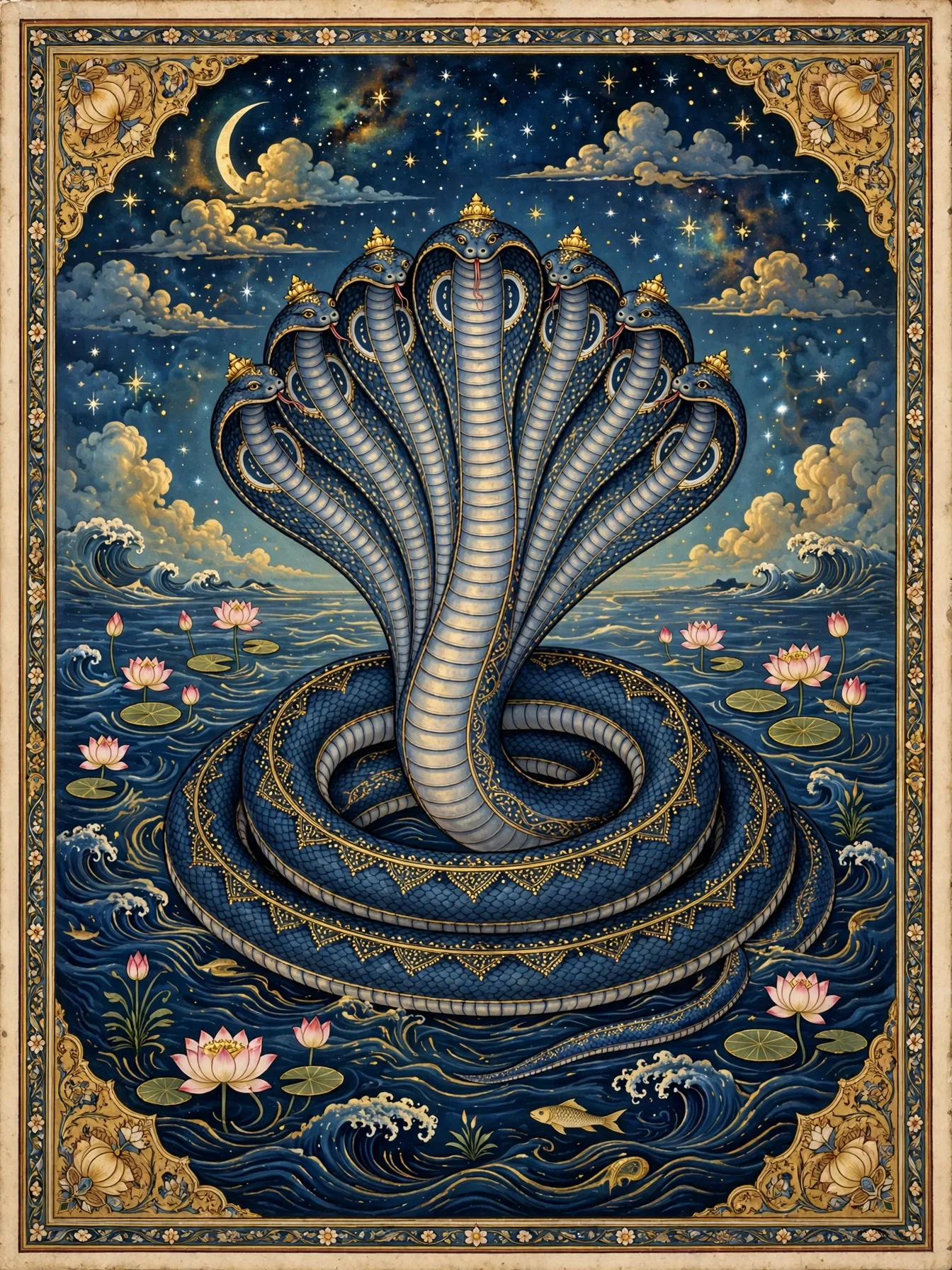
Now go back much further, & halfway around the world. The Vedic seers of India divided the sky into 27 nakshatras, star mansions the Moon moves through. The 26th is Uttara Bhadrapada, deep in Pisces, the last of the water signs. Its deity is Ahirbudhnya, the serpent of the deep waters. Barbara Pijan Lama, whose work I study, gives his shakti as the power to bring the rain & to raise the kundalini, & his theme as deep stillness, foundations under water, patience. He lives at the bottom. He is mostly submerged. He surfaces only in glimpses, & when he rises he curls over like a hump on the water. Claire Nakti, whose research I also study, teaches that the Bhadrapada nakshatras are about crossing the abyss. Even the modern writers on this star list its symbols as the snake in the water, the Loch Ness monster & the leviathan.
& his gift is not only the rain. He is one of the Rudras, & Rudra is a healer. He is the kundalini serpent himself, the coiled energy at the base of the spine, & this star is said to connect us with the wellsprings of vitality. The rain on the surface, & underneath it, healing.
So here is my conclusion, from my own research, & I will say it plainly. Champ is Ahirbudhnya. Two peoples who never met described the same being. One watched a lake for thousands of years & named him Tatoskok. The other watched the sky for thousands of years & named him Ahirbudhnya, the serpent of the deep. A serpent who lives at the bottom of deep water, mostly submerged, only glimpsed at the surface, in a lake over 400 feet deep, under a star in the sign of the fish.
One more thing about the people of this star. Uttara Bhadrapada people are seemingly fueled by contact with the earth, so they walk. They walk a lot. One resident I know well loved to walk until he physically could not anymore. & next door at Grosse Point, Jessica Swift walked her land every single day until the day she died, at 110 years old. The serpent of the deep keeps to the bottom of the lake. His people keep to the ground above it, on foot.
My first memory of Champ is not a sighting at all. I was small, riding the Lake Champlain ferry with my parents, the ferry painted macaroni & cheese orange, standing right at the railing at that in between height where a child can see almost nothing of the water. I only knew he was out there somewhere beneath us, in all that deep. This past summer I stood at what I believe is the very same railing, on the very same crossing, with my own daughter. The railing is chain link now, so she could see out, all that deep spread in front of her. The ferry still crosses. The lake still keeps its serpent. The children still keep their posts at the rail.
You will notice Champ on the bottom right of my business card, the little serpent line, the wave that curls into a neck & a head. That is him. It was always him.
& this is my tribute to him.
This post is for educational purposes only & shares my personal research & experience.